Anise Seed Biscotti
Lightly sweet, fragrant, and unmistakably old-school. Anise Seed Biscotti is the classic Italian flavor many people remember growing up with: whole anise seeds, a clean crisp snap, and a warm finish that belongs beside coffee or espresso.
I still remember my mother baking with my grandmother. My nonna asked her to grab the anise. My mother reached for the extract. My grandmother got up, opened the cabinet, and pulled out the seeds herself. No speech. No lecture. Just a quiet correction from someone who knew the difference.
That little moment says a lot about this flavor. Good anise seed biscotti should not taste sharp, artificial, or candy-like. It should smell warm the second you open the bag. It should have a clean, crisp bite. And it should leave behind that gentle old-world anise flavor that makes people stop and say, “That’s the one I grew up with.”
What anise seed biscotti tastes like
The moment you open the bag, you are met with the warm, unmistakable aroma of anise seed. As the biscotto gets closer, that classic old-world scent becomes even more pronounced. On the first bite, you notice a touch of vanilla, followed by a light, well-balanced licorice flavor from the anise seed. The sweetness is just right, and the hint of sea salt at the finish ties it all together, leaving you with a warm, comforting feeling.
Anise is often described as licorice-like, and that is fair, but good anise biscotti does not hit like candy. It is softer than that. More elegant. More baked-in. It works because the flavor sits inside the dough instead of shouting over it. That is what makes it feel traditional and comforting instead of overpowering.
One of the reasons people keep coming back to this flavor is its simplicity. Whole anise seeds, vanilla, almond flour, and a touch of anise oil work together without chocolate, glaze, or heavy sweetness competing for attention. The anise gets to be the star.
What makes this classic Italian flavor special
What customers say
“Just like Nonna made.”
Lynn F., verified customer
“Not your typical anise biscotti. Much, much better.”
Terry Q., verified customer
“Reminded me of my grandmother who came from Italy and made anise biscotti. The flavor is remarkable.”
Verified customer
“My grandmother would be jealous she didn’t make it. So true to old-world Italian taste.”
Tony G., verified customer
How to enjoy anise seed biscotti
With espresso or strong coffee
This is the classic pairing. The bitterness of coffee plays against the light sweetness of the biscotti, while a quick dunk softens the crisp texture just enough.
Espresso with a splash of anisette
Pull a shot of espresso, add a small splash of anisette liqueur, and serve it alongside your biscotti. The anise aromas echo each other for an unmistakably old-school Italian pairing.
After Sunday dinner
A few anise biscotti and a small coffee are sometimes all you need after a meal. Simple, traditional, and satisfying.
Anise biscotti vs anisette biscotti
People often use the terms anise biscotti, anise seed biscotti, and anisette biscotti when searching for this traditional flavor, but they do not always mean exactly the same thing.
Anise is the aromatic seed and spice responsible for the familiar licorice-like flavor. Anisette is a sweet liqueur flavored with anise. Some biscotti recipes use seeds, some use anise flavoring or liqueur, and some use a combination. Our biscotti is built around whole anise seeds with a touch of anise oil, giving it the warm aroma and balanced flavor of traditional Italian bakery-style biscotti.
Why whole anise seeds matter
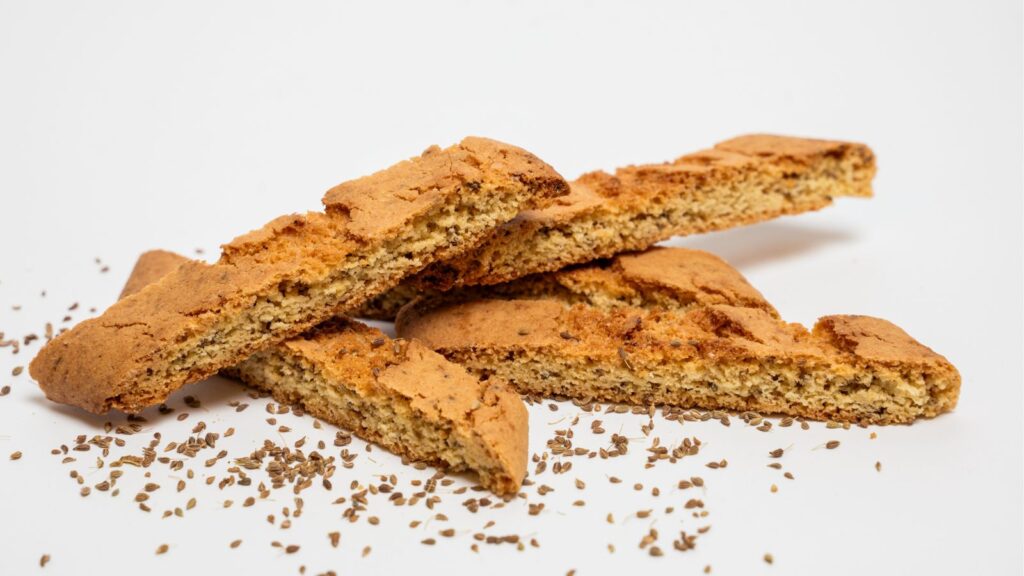
Whole anise seeds do more than add flavor. As the biscotti bake, the seeds contribute aroma throughout the dough and give each slice its characteristic speckled appearance. Bite into one and you can actually see the ingredient responsible for that familiar flavor.
We pair the whole seeds with vanilla and a touch of anise oil to round out the flavor. The result is distinctly anise without becoming harsh or one-dimensional.
That balance is a big part of why this flavor has lasted for generations. It is simple, but it is not plain. It has character without needing chocolate, glaze, or extra sweetness to make its point.
One bag or three?
Trying Anise Biscotti?
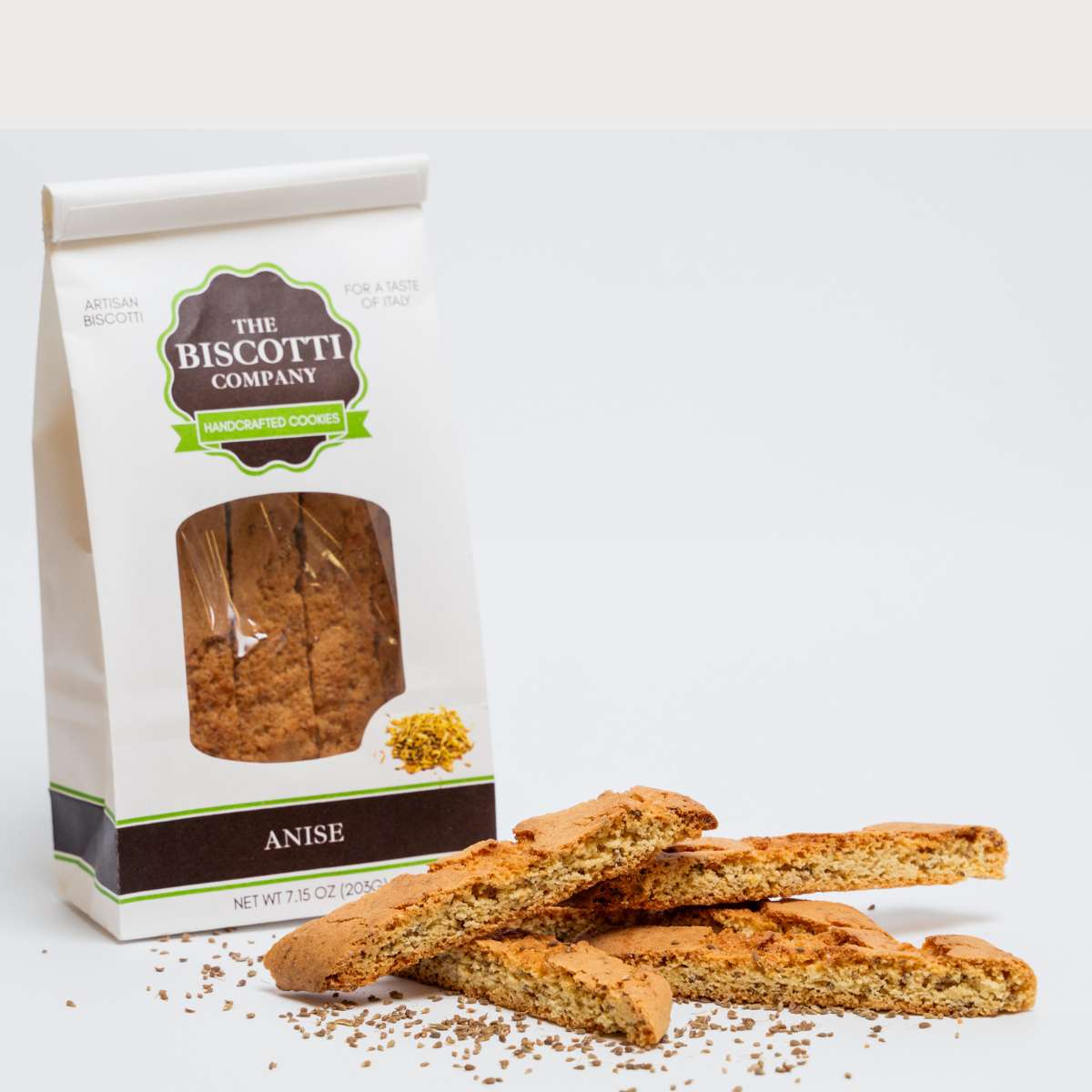
Start with a single 7.15 oz / 203 g bag containing approximately 12 biscotti. It is an easy way to discover whether this traditional flavor belongs in your coffee routine.
Already know you love it?
The Anise Biscotti 3-Pack gives you three full-size bags and approximately 36 biscotti. Keep one open and the others sealed in the pantry so you do not run out of your favorite.
Learn the basics
New to biscotti or shopping for someone else? Start with our Biscotti Guide.
Want the homemade version?
See our Authentic Anise Biscotti Recipe with Anise Seeds for the at-home approach.
Love traditional Italian baking?
Read Italian Anise Cookies and Biscotti Recipes for more old-world favorites.
Frequently Asked Questions
Do anise seed biscotti taste like licorice?
Yes, anise has a naturally licorice-like flavor, but good anise biscotti is much gentler than licorice candy. Our version is warm, aromatic, lightly sweet, and balanced rather than sharp or overpowering.
What is the difference between anise seed biscotti and anisette biscotti?
Anise is the aromatic seed responsible for the familiar licorice-like flavor. Anisette is a sweet liqueur flavored with anise. Biscotti recipes may use anise seeds, anise flavoring, anisette, or a combination. Our Anise Biscotti uses whole anise seeds along with a touch of anise oil.
Are these made with whole anise seeds?
Yes. Whole anise seeds are baked throughout the biscotti and give them their characteristic aroma and traditional flavor. We also use a touch of anise oil to round out the flavor.
Are anise seed biscotti dairy-free?
Yes. Our Anise Biscotti is dairy-free. It does contain wheat, egg, and almond.
What do anise seed biscotti pair well with?
Espresso, cappuccino, black coffee, and tea are all excellent pairings. For an old-school Italian combination, serve them with espresso and a small splash of anisette liqueur.
How strong is the anise flavor?
The anise is distinct and present without being overpowering. Whole seeds provide warm aroma and traditional flavor, while vanilla and a touch of anise oil help create a balanced finish.
How many Anise Biscotti come in a bag?
Each 7.15 oz / 203 g bag contains approximately 12 biscotti. Because they are baked in small batches, the exact count can vary slightly.
Can I buy Anise Biscotti in a 3-Pack?
Yes. Our Anise Biscotti 3-Pack includes three 7.15 oz bags, with approximately 36 biscotti total. It is a good choice if Anise is already one of your favorite flavors and you want to keep extra bags on hand.
Where can I order anise seed biscotti online?
You can order a single bag of Anise Biscotti or stock up with our Anise Biscotti 3-Pack, both shipped nationwide directly from The Biscotti Company.