The 2026 Biscotti Report
Tradition Defines the Ritual.
Flavor Drives the Choice.
A 200-response community survey and a separate 74-response Chocolate Almond follow-up explore how people choose biscotti, what draws them to a new flavor, and what makes a favorite feel traditional.
For Bruno LoGreco, biscotti belongs to a particular moment: after dinner, with an espresso. The flavors he dunks are Almond or Anise. That is the family ritual he grew up with. Cranberry Pistachio and Double Chocolate belong to a different experience. He enjoys them, but he would not put them into the same cup. [3]
In The Biscotti Company’s survey, one respondent described trying different flavors before settling on Cranberry Pistachio as the only flavor they now buy. That same respondent also said they usually stayed with traditional flavors. [1]
Perhaps those answers are not a contradiction. For Bruno, tradition is connected to an inherited ritual. For that respondent, it may also be connected to a familiar favorite.
When does a favorite become a tradition?
That question sits at the heart of this report. The findings reveal different starting preferences, considerable interest in variety, and flavor categories that do not always stay neatly apart.
This is a voluntary survey of The Biscotti Company’s community, largely existing purchasers, not a nationally representative study. It offers a view of how this audience thinks about biscotti and the choices that make it personal. [1]
Five Findings at a Glance
71.4% prefer multiple flavors on a first purchase: 142 of 199 chose several individual flavors or a variety pack/bundle. [1]
92% selected one of three leading flavor paths: Fruit-and-Nut, Traditional, and Chocolate accounted for 184 of 200 first-choice answers. [1]
18 of 34 self-described traditionalists chose another path first: 52.9% selected a first-choice option other than the one labeled Traditional. These 34 are a subgroup of the original 200 responses. [1]
75% selected appealing ingredients or flavor combinations as a reason to try something new: the most frequently selected trial influence. [1]
77% primarily buy for themselves or their household: personal and household enjoyment was the main purchasing purpose. [1]
Three Doors Into Biscotti
Asked which type of biscotti they were most likely to choose first, respondents selected from five flavor paths.
| First-choice flavor path | Responses | Share |
|---|---|---|
| Fruit-and-Nut, such as Cranberry Pistachio | 74 | 37.0% |
| Traditional, such as Almond or Anise | 64 | 32.0% |
| Chocolate | 46 | 23.0% |
| Bright citrus or fruit | 10 | 5.0% |
| Dessert-inspired | 6 | 3.0% |
Source: Primary survey, 200 responses. [1]
Fruit-and-Nut was the largest first-choice group in this sample, five percentage points ahead of Traditional. Together with Chocolate, those three paths accounted for 92% of responses. [1]
The report calls these three leading preference paths the Three Doors Into Biscotti. They describe where respondents say they would begin, rather than fixed identities that define everything they enjoy.
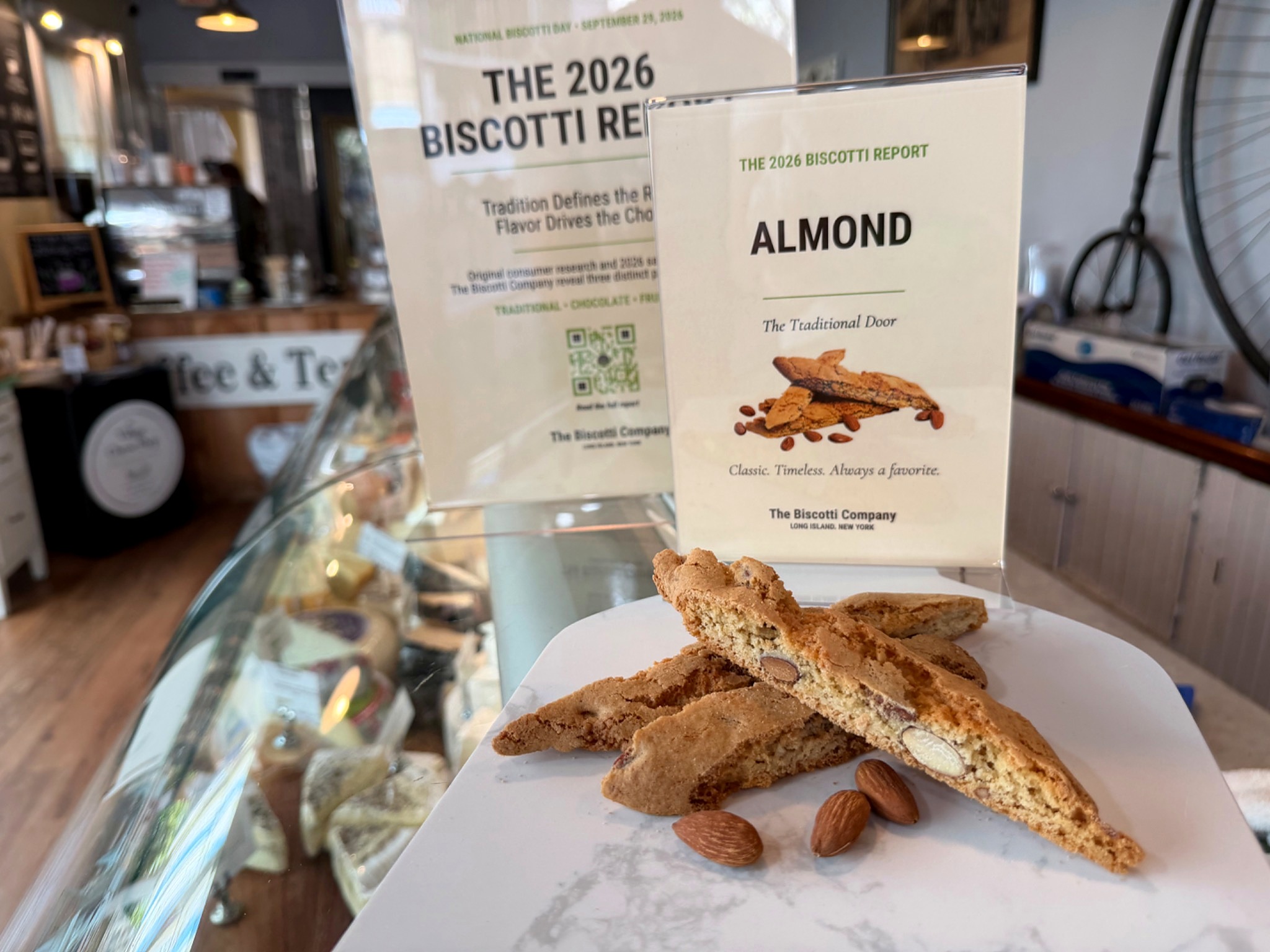
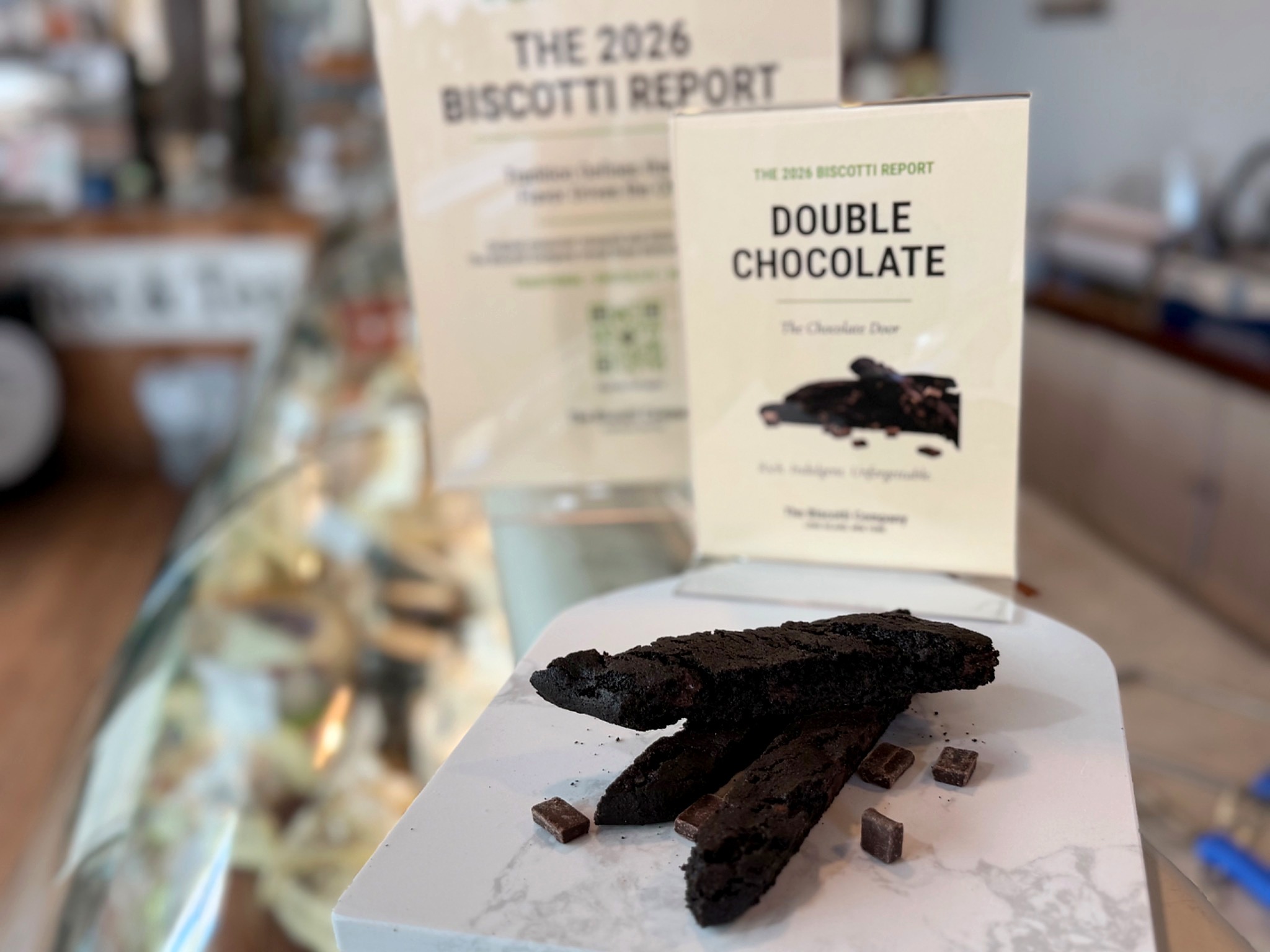
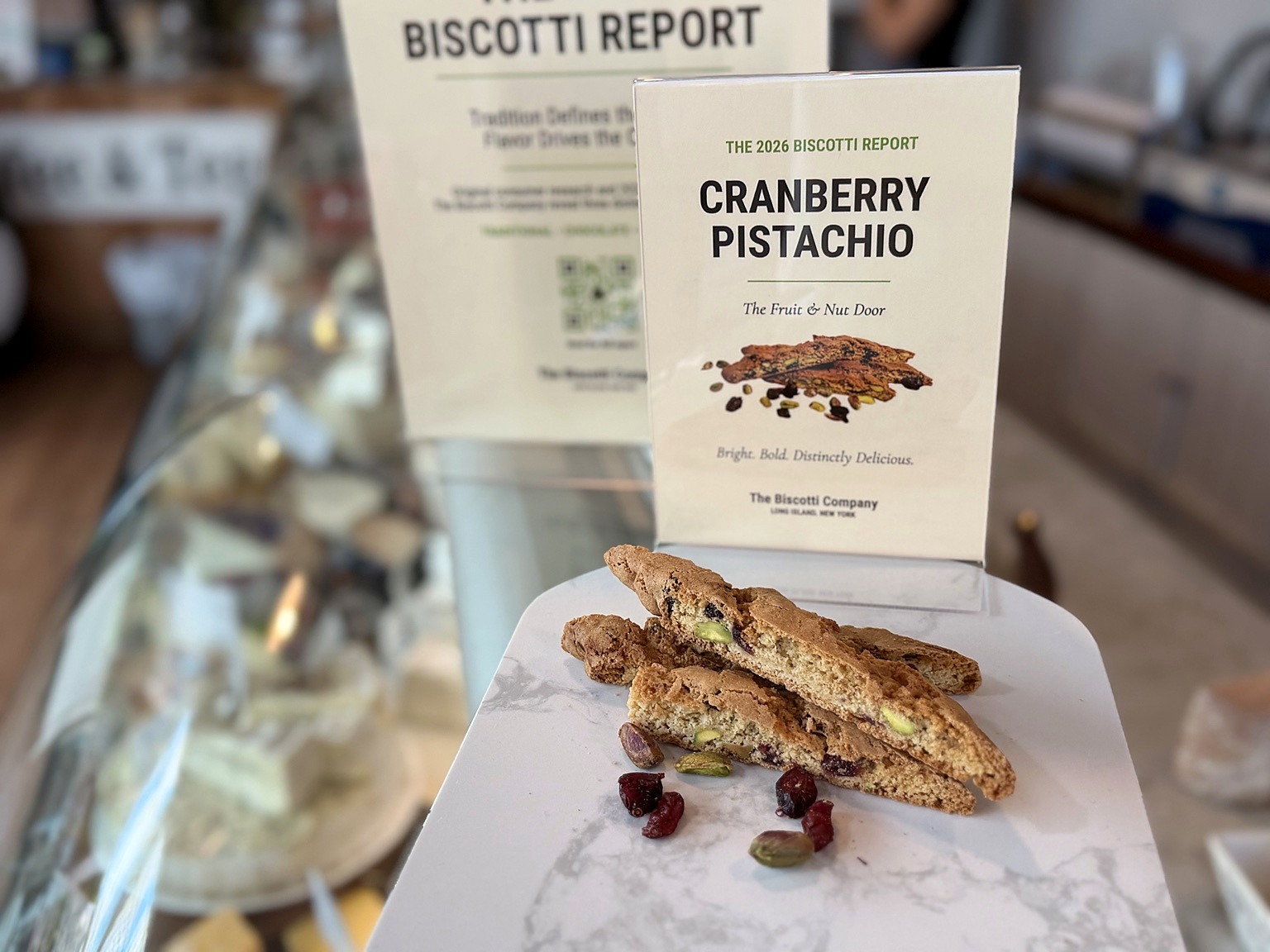
In the bakery, Almond or Anise can illustrate the Traditional door. Double Chocolate offers a clearly chocolate-forward example. Cranberry Pistachio illustrates Fruit-and-Nut. These examples make the preferences tangible without assigning every biscotti flavor to a single category. [3]
Tradition Is a Starting Point, Not Necessarily a Limit
The largest group, 37.5%, said they usually start with traditional flavors but sometimes try new combinations. Another 17% said they usually stay with traditional flavors. Together, 54.5% described tradition as somewhere they usually begin or stay. [1]
Others took a different approach: 26% chose traditional and newer flavors about equally, 12.5% decided according to mood or occasion, and 7% usually looked for unusual or newer combinations. [1]
The answers leave room for more than a choice between strict traditionalism and constant novelty. Someone can begin with a familiar flavor and still be curious about another.
But the next finding raises a more basic question: What does “traditional” mean to the person choosing?
The Loyalist Discovery
Within the original 200 responses, 34 people selected the statement “I usually stay with traditional flavors.” Their first-choice preferences, however, were not confined to the separately listed Traditional option. [1]
| First choice among these 34 respondents | Responses | Share of subgroup |
|---|---|---|
| Traditional, such as Almond or Anise | 16 | 47.1% |
| Chocolate | 9 | 26.5% |
| Fruit-and-Nut, such as Cranberry Pistachio | 8 | 23.5% |
| Bright citrus or fruit | 1 | 2.9% |
Source: Subgroup within the primary survey, 34 responses. None selected Dessert-inspired. [1]
More than half, 18 of 34, selected a first-choice path other than the option labeled Traditional. [1]
One possible explanation is that “traditional” sometimes describes what feels familiar to someone, not only the flavors used to illustrate that label in the questionnaire.
The Cranberry Pistachio respondent from the opening gives that possibility a human face. They described having tried other flavors before settling on one favorite, while also saying they usually stayed with traditional flavors. This is one person’s account, not evidence that everyone in the subgroup uses the word in the same way. [1]
A Preference for One Flavor
The subgroup also differed in how its members said they would approach a first purchase from a bakery.
Among the 33 who answered that question, 19 preferred a single flavor: 57.6%. Among the other 166 respondents, 38 preferred a single flavor: 22.9%. One member of the traditionalist subgroup did not answer the purchase-format question. [1]
Put together, the pattern is more specific than a preference for Almond or Anise: respondents who described themselves as staying with traditional flavors were also more inclined to start with one flavor, but that flavor was not necessarily in the survey’s Traditional category.
These are stated preferences, not verified repeat orders. “Loyalist” is an editorial description of this exploratory finding, not a measured customer-retention segment.
A familiar favorite is one possible explanation. There is another: some respondents may simply consider a chocolate flavor traditional. The separate follow-up helps explain why that possibility matters.
The Doors Are Not Walls
The results in this section come from a separate survey with 74 responses, not the 34-person subgroup above.
The follow-up asked:
Do you consider Chocolate Almond biscotti a traditional flavor, a chocolate flavor, or both?
| How respondents classified Chocolate Almond | Responses | Share |
|---|---|---|
| Chocolate | 31 | 41.9% |
| Both traditional and chocolate | 29 | 39.2% |
| Traditional | 13 | 17.6% |
| Something else | 1 | 1.4% |
Source: Separate Chocolate Almond follow-up, 74 responses. Percentages may not total 100% because of rounding. [2]
Chocolate was the largest single answer, but no answer received a majority. Almost two in five respondents, 39.2%, explicitly placed Chocolate Almond in both categories. [2]
Combining Traditional with Both, 42 of 74 respondents, or 56.8%, recognized a traditional component. [2]
The distinction matters: a person can choose chocolate without necessarily feeling that they have stepped away from tradition.
These results offer a plausible category-overlap explanation for part of the earlier finding. They do not establish how the original 34 traditionalists classified Chocolate Almond, because the two surveys cannot be linked at the respondent level.
From a baker’s perspective, other flavors can bridge paths too. Cherry Chocolate connects fruit and chocolate. Dark Chocolate Orange Almond combines chocolate and citrus with an almond foundation. Those are The Biscotti Company’s product interpretations, not additional survey classifications. [3]
The doors describe ways to approach biscotti. They do not require every flavor, or every person, to belong behind just one.
Discovery Does Not Have to Start With One Flavor
When asked what they would be more likely to buy when trying biscotti from a bakery for the first time, 71.4% of 199 respondents preferred multiple flavors. [1]
The largest group, 41.2%, wanted several individual flavors. Another 30.2% preferred a variety pack or bundle. The remaining 28.6% preferred a single flavor. [1]
The distinction between the first two choices matters. A preference for multiple flavors does not necessarily mean a preference for a preselected assortment. More respondents wanted to choose several individual flavors than to buy a variety pack.
For these respondents, a first purchase could be an opportunity to compare rather than commit immediately to one choice.
Set beside the loyalist finding, this leaves room for different approaches. Some people want a selection to explore. Others would rather begin with one flavor that already sounds right to them. Neither approach has to define someone permanently.
Flavor Gives People a Reason to Try
Asked what most influences them to try an unfamiliar biscotti flavor, 75% selected appealing ingredients or flavor combinations. This was the most frequently selected influence, cited by 150 of 200 respondents. [1]
Trust in the bakery or brand and inclusion in a variety pack or bundle were each selected by 24%. Being able to sample first was selected by 21%, while seasonal or limited-time availability was selected by 19.5%. A sale or promotion was selected by 14%, and customer reviews by 9%. [1]
This question allowed multiple selections; percentages are shares of respondents, not shares of all selections. See methodology for the treatment of answers exceeding the requested limit.
The leading answer is straightforward: the ingredients and combination have to sound like something worth tasting. Before the first bite, they offer a way to imagine the flavor.
Variety gives someone room to compare. Flavor gives them a reason to be curious.
The Coffee Connection Is Personal
Coffee appeared in the most common way to enjoy biscotti for 52% of respondents. That includes 24% who selected dunking in regular coffee, 7% who selected dunking in espresso, cappuccino, or latte, and 21% who enjoyed biscotti with coffee without dunking. [1]
The explicit dunking answers therefore accounted for 31% of the sample. Others most often enjoyed biscotti on its own (19.5%), said it varied (16%), or selected tea (8.5%), milk (3.5%), or wine or another after-dinner drink (0.5%). The question asked what people did most often, not whether they ever dunked. [1]
Bruno’s after-dinner espresso ritual is one way to enjoy biscotti, not a rule for everyone. His choice changes with the flavor: Almond and Anise belong in the espresso; Cranberry Pistachio and Double Chocolate do not. [3]
For him, the distinction is simple:
The coffee ritual survives. The dunk depends on the flavor.
The Familiar Bag at Home
77% primarily bought biscotti for themselves or their household. Another 18.5% bought for themselves and as gifts about equally, 3.5% bought mostly as gifts, and 1% did not currently buy biscotti. [1]
For this audience, biscotti was more often a personal or household purchase than a gift-only purchase. The gift box is part of the story, but so is the bag someone keeps for themselves.
Three Doors. One Biscotti Category.
The findings leave room for both familiarity and curiosity. People can prefer several flavors when discovering a bakery, have one dependable favorite, or place the same biscotti in more than one flavor category.
For The Biscotti Company, the idea at the heart of this report is:
Biscotti has not moved away from tradition. It has expanded outward from it.
Bruno’s tradition is still Almond or Anise with espresso after dinner. Someone else’s familiar favorite may be Cranberry Pistachio or Double Chocolate.
The flavors can be different. The pleasure of finding your favorite is something they can share.
Some traditions are inherited. Others are made our own.
About The Biscotti Company
The Biscotti Company is a small-batch Long Island bakery founded by Bruno LoGreco. Its classic and contemporary biscotti draw on his family’s Sicilian baking tradition. [3]
Media Downloads
Download the report and supporting materials for reference, coverage, or editorial use.
Full Report
The complete 2026 Biscotti Report, including findings, methodology, and source notes.
Download full report5 Findings at a Glance
A concise branded summary of the report’s five headline findings.
Download 5 findingsPress Release
The official September 29, 2026 press release for The 2026 Biscotti Report.
Download press releaseTransparent Logo
Transparent-background logo for layouts, video, and broadcast graphics.
Download transparent logoBruno LoGreco, Founder & Head Baker
High-resolution portrait of Bruno LoGreco with The 2026 Biscotti Report, espresso and biscotti.
Download founder photoTraditional Door: Almond
High-resolution Almond image representing the Traditional Door.
Download Almond imageFruit & Nut Door: Cranberry Pistachio
High-resolution Cranberry Pistachio image representing the Fruit & Nut Door.
Download Cranberry Pistachio imageChocolate Door: Double Chocolate
High-resolution Double Chocolate image representing the Chocolate Door.
Download Double Chocolate imageMethodology and Source Notes
Primary Survey
The analysis uses the previously locked first 200 responses, collected September 3–6, 2026, from the 2026 Biscotti Preference Survey. The supplied export contains 201 responses. The later 201st response was excluded solely to preserve the agreed 200-response cutoff. This cutoff does not indicate verified form closure. [1]
The voluntary online survey was distributed through The Biscotti Company’s email and social channels. Within the sample, 166 respondents (83%) reported purchasing directly from the company’s website, and 27 (13.5%) through QVC or a retail store. The remaining seven (3.5%) reported other familiarity with the company. Results largely reflect prior purchasers, not the population of all biscotti consumers. [1]
The first-purchase question has 199 answers; the other closed-ended questions have 200. The optional written question has 171 nonblank answers. Percentages are unweighted and use the applicable question or subgroup base. The study describes self-reported and hypothetical preferences, not observed first orders or national market shares. No population margin of error or change over time is claimed. [1]
Multiple-Select Responses
The trial-influence question instructed respondents to choose up to two answers. Eighteen selected more than two. All recorded selections were retained rather than arbitrarily removing choices. Percentages use all 200 respondents as the denominator and can total more than 100%. Alongside the leading influences in the report, Other was selected by 5%, a friend or family recommendation by 2%, and buying as a gift by 2%. [1]
Traditionalist Subgroup and Separate Follow-Up
The 34-person subgroup consists of primary-survey respondents who selected “I usually stay with traditional flavors.” Their answers were compared with first-choice flavor path and first-purchase format. One purchase-format answer was missing, leaving 33 subgroup answers and 166 outside it. The term “loyalist” is exploratory; the analysis does not validate repeat purchasing, retention, or exclusive brand loyalty. [1]
The 74-response follow-up, collected September 6–7, 2026, asked only how respondents classified Chocolate Almond. It is analyzed separately. No identifying field permits matching responses between surveys or to orders. Counts describe submissions, not independently verified unique people. Overlap cannot be established, so the two samples must not be described as 274 unique participants. [2]
Interpretation and Transparency
The company distributed a separate thank-you product offer during collection. The exports do not identify exposure or redemption, so its effect on participation cannot be assessed. No redemption conclusions are drawn.
The Three Doors framework, product illustrations, and personal-tradition interpretation are editorial. The main survey did not ask respondents to classify individual products or whether dunking habits change by flavor. The Cranberry Pistachio account is an anonymous paraphrase of one written answer, not a finding about everyone in the subgroup. Founder background is company-provided. No customer identities or transaction-level records are published.
Sources
[1] Primary survey: 2026 Biscotti Preference Survey-13.csv, first 200 response rows. Calculations and subgroup comparisons were recomputed from this file.
[2] Separate follow-up: One More Biscotti Question-2.csv, all 74 response rows.
[3] Company background: Founder ritual, bakery description, and product examples supplied by Bruno LoGreco and The Biscotti Company. These are not survey findings.
Full question wording, aggregate frequencies, and calculation checks appear in the companion Calculation and Source Notes.